W. C. Handy Walking in Memphis

Today was going to be Squirrel Nut Zippers, but Marc Cohn had other ideas, forcing his way into my consciousness once again.

Put on my blue suede shoes and I boarded the plane. Touched down in the land of the delta blues, in the middle of the pouring rain . . .
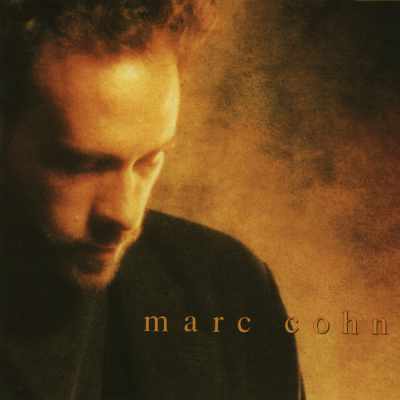
the cover of Marc Cohn's eponymous first albumWalking in Memphis is filled with the mental imagery and musical references that inspire and evoke. At the beginning spare and simple, building to a nearly symphonic conclusion and tossing in some Jewish gospel along the way, Marc’s piano and voice solidly lead us through. Opening with solo piano and Marc’s distinctive voice, eventually including a choir and full band, in the end winding back down to Marc’s voice and the beautiful piano theme that characterizes the tune.

Sounding terribly autobiographical, the tune is about travelling to the home of so much of American traditional music. Homage is paid to W. C. Handy, the late Muriel Wilkins (pianist at the Hollywood Cafe), Elvis, and Beale Street itself.

(More recently, Cohn has touched me with his song “Lost You in the Canyon.” It vividly reminds me of lost relationships, and some that never were.)
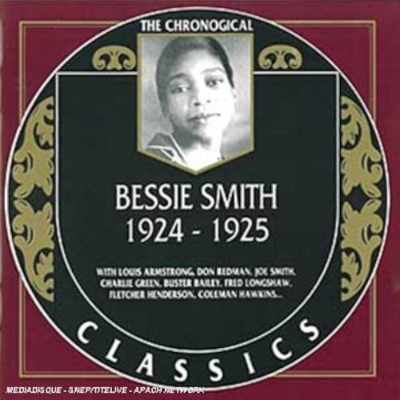
the cover of the Bessie Smith album '1924-1925'W. C. Handy is credited with writing, in 1910, the first American blues tune, The Memphis Blues which, due to publishing difficulties, was not released until 1912. The Handy tune I love most is his St. Louis Blues, especially Bessie Smith‘s version. The quintessential blues voice, drawling, swooping, climbing up to find one note, then sliding down for the next, is backed by one of the most passionate performances I’ve ever heard Louis Armstrong give. The only other instrument on the recording is Fred Longshaw’s harmonium (think ‘table-top accordion’) but somehow, it achieves a full-throttle sound you’d expect from a full jazz band.

Jazz forces me to think and feel beyond what is simple and obvious. Music should stretch your soul. Jazz stretches mine.
Central Reservation

I can’t really explain why I’m so captivated by Beth Orton’s Central Reservation. I don’t understand the lyrics, and one of the many remixes I thoroughly enjoy is a style of music I normally don’t even listen to.

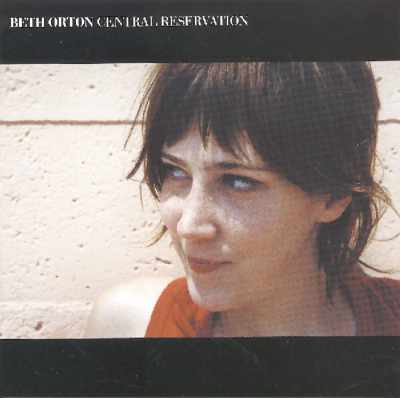
the cover of Beth Orton's album 'Central Reservation'As the title track to her latest album, it was originally recorded as a slow, almost sleepy ballad. The first version I heard was remixed by Ben Watt of Everything But The Girl” and has quite a bit more bounce and beat. Hearing the original after that took the right mood, but each, in its own place, is perfect.

The one I just don’t understand liking is the Spiritual Life Ibadan Mix which starts with a single pounding drum which doesn’t let up for eight minutes. After the rest of the instruments jump in, what sounds like the ‘Ben Watt’ mix vocals join in the fray. In the middle of this hammering dance tune we’re treated to a blistering acoustic guitar solo which is starting to sound natural to me.

Burning Airlines Block Black Light Syndrome

Yup; it almost spells ‘babbles’ and that’s how we’ll pronounce it, okay?

Quick jaunt through three songs you may not have heard, but should:

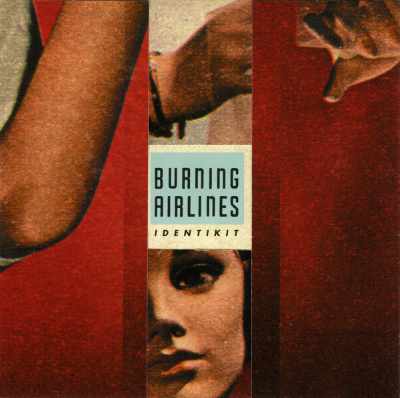
  • Deluxe War Baby from the 2001 Burning Airlines album Identikit – formed four years before their name would become permanently politically incorrect, the band’s Deluxe War Baby is a fine example of what loud rock can achieve when it’s arranged well. cover of the Burning Airlines album 'Identikit'Dynamics (as in using both loud and soft) play a huge part, with the opening plunky sounding guitar and Dylanesque vocals eventually puncuated by crunchy drums, bass, and more guitars, just before the time signature switches to 3/4 time (yes, that’s a waltz.) This ain’t no waltz, though. When lead vocalist J. Robbins wails “Never have I felt so well policed; why should I be anything but pleased?” the discordant rumble of multi-layered guitars makes the sarcasm bite harder. Even if edgy rock isn’t your cup of whiskey, Deluxe War Baby is worth a listen. “We’re all headed west, whatever we think we believe . . .”
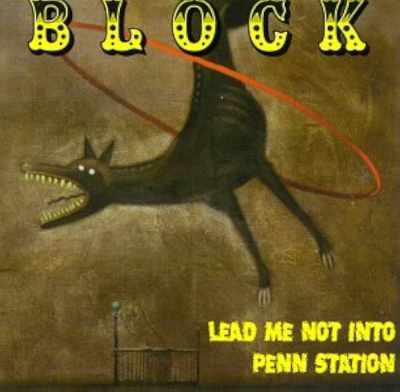
  • Rhinoceros from the 1996 Block album Lead Me Not Into Penn Station – I like Jamie Block’s sense of humor. Lyrically and musically, it’s a fun song. “My lawyer said, ‘Hey Jamie, think poppy; think catchy’; okay . . .” cover of the Jamie Block album 'Lead Me Not Into Penn Station'A simple bass line alternating with sandpaper rhythym electric guitar and a not-too-difficult chorus (“Rhinoceros” [x4]) make this one of those catchy tunes you’ll find it difficult to put out of your head. Interesting jungle-fever-bird/chattering monkey guitar licks near the end. Also available on the Blast from the Past soundtrack, where it has some impressive company which we’ll discuss later.
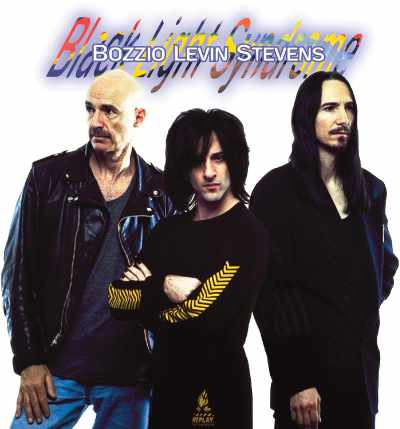
  • Spiral from the 2000 Bozzio Levin Stevens album Situation Dangerous – Hmmmmm . . . where does one begin? Tony Levin (bassist for Peter Gabriel, Yes, King Crimson, Paul Simon, Carly Simon, Lucy Simon, Warren Zevon, Tom Waits, James Taylor, Livingston Taylor, Ringo Starr, Pink Floyd, Nanci Griffith, Judy Collins, and a bazillion others) joins Terry Bozzio (Missing Persons, Frank Zappa, Steve Vai, Jeff Beck) and Steve Stevens (Billy Idol, Michael Jackson, grammy for Top Gun) to form a power trio not unlike a new millenium Cream with a twist. Spiral is not their usual black thunder, though. Beginning slowly, almost pensively, Stevens’ classical guitar becomes more and more complex and fiery, joined by ever intensifying percussion of every kind. Behind it all, swirling, dancing, now echoing, now countering, is Levin’s bass, never in the same place twice. A journey of epic proportion which never fails to bring a smile to my face; whether you love classical guitar, progressive rock, or something in between, I defy you not to be captivated.

See the Sun Spreading Wings of Gold . . .

Got no reason,
but that I must.
Maybe I feel
like I’ve been gathering dust . . .

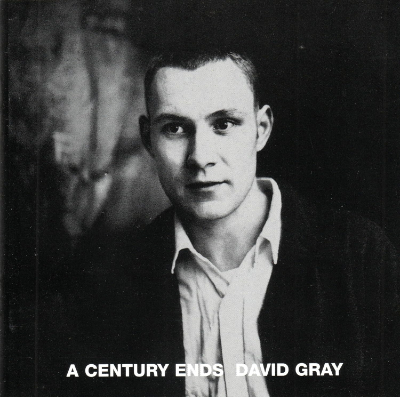
I wish I had discovered David Gray before Babylon but I’m glad I discovered him at all. Gathering Dust from his glorious 1993 debut album A Century Ends has been running through my mind almost enlessly of late. (It shares said album with the emotional Shine and the philosophical Birds Without Wings which I believe was also David’s first single.)

Beginning with solo rhythym acoustic guitar, as many of Gray’s songs do, it gradually builds, adding keyboards, acoustic lead guitar, bass, and more. The electric piano subtly seconds David’s guitar from nearly the beginning. The second acoustic guitar counterpoints the rhythym beautifully, adding punctuation or emphasis where needed. Keyboards and rhythym guitar respond in kind, building to a full, rounded sound. By the time we get to the deliriously poetic

See the sun spreading wings of gold
as the dawn unfurled,
Hear the song the moon sings
to the darkened world

it has built to sizeable proportions, at which point, everyone drops out except the opening guitar and keyboards, fading to a soft, sad finish.

For more David Gray, try the official website, or their list of other links. I’ve spent quite a bit of time at Drunken Gibberish even though they spell their own name wrong. And of course, buy all David’s albums.

If You Ever Plan to Motor West

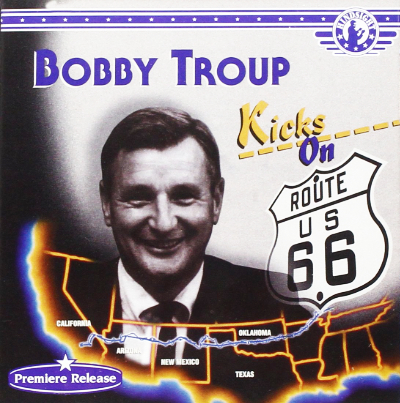
This song’s been as many places as the hiway itself. Originally penned by jazz pianist Bobby Troup, it’s been covered by nearly everyone. Nat King Cole, Perry Como, Mott the Hoople, and the Rolling Stones have all had a crack at it, and it remains intact.

Troup had quite a career as a jazz pianist and composer, but somehow, as someone who spent the early 70s glued to a television, I can only think of him as Dr. Joe Early from the series Emergency. Two of his albums listed at Amazon.com (he recorded six) contain his version of the song. The two versions I’m listening to right now couldn’t be more different from each other, but I love ’em both.

The more traditional version of the two is by a Santa Cruz band called Wally’s Swing World. I discovered Wally Trindade and company on a business trip to San Jose, and I was stunned by the intensity of this little swing band performing literally on a loading dock in an alley. (A full review of the group’s efforts is planned; ask me about it, in case I forget.) Their second album, Full Swing Ahead (1996) opens with a very bouncy, very traditional reading of Route 66. Wally has a great voice, and the band has performed together long enough that everything has the crisp precision of a Glenn Miller recording. Further down the playlist, Wally’s cheery passage through I Get A Kick Out of You made it impossible for me to listen to Sinatra’s version again; it’s Wally’s tune now. Although it was a star of the band’s live act, Wally’s guitar (a ’58 Gretsch Country Club . . . be still my beating heart) doesn’t really show up until their fiery blitz of American Bandstand. It’s worth the wait. Trindade could make it on his guitar-playing alone.

The album closes with Mack the Knife which is remarkably underplayed, considering the clowning Wally does during the live show. Musical integrity seems to have compelled the band to turn in a very straightforward version, and they do it well. There’s a third album, More Than A Swing Thing; their first album, Welcome to Wally’s Swing World (1994) is out of print and can’t be had for love or money (although, if anyone’s got one, I’m willing to negotiate.) [Note: the site no longer exists and I don’t find their albums used anywhere except eBay.]

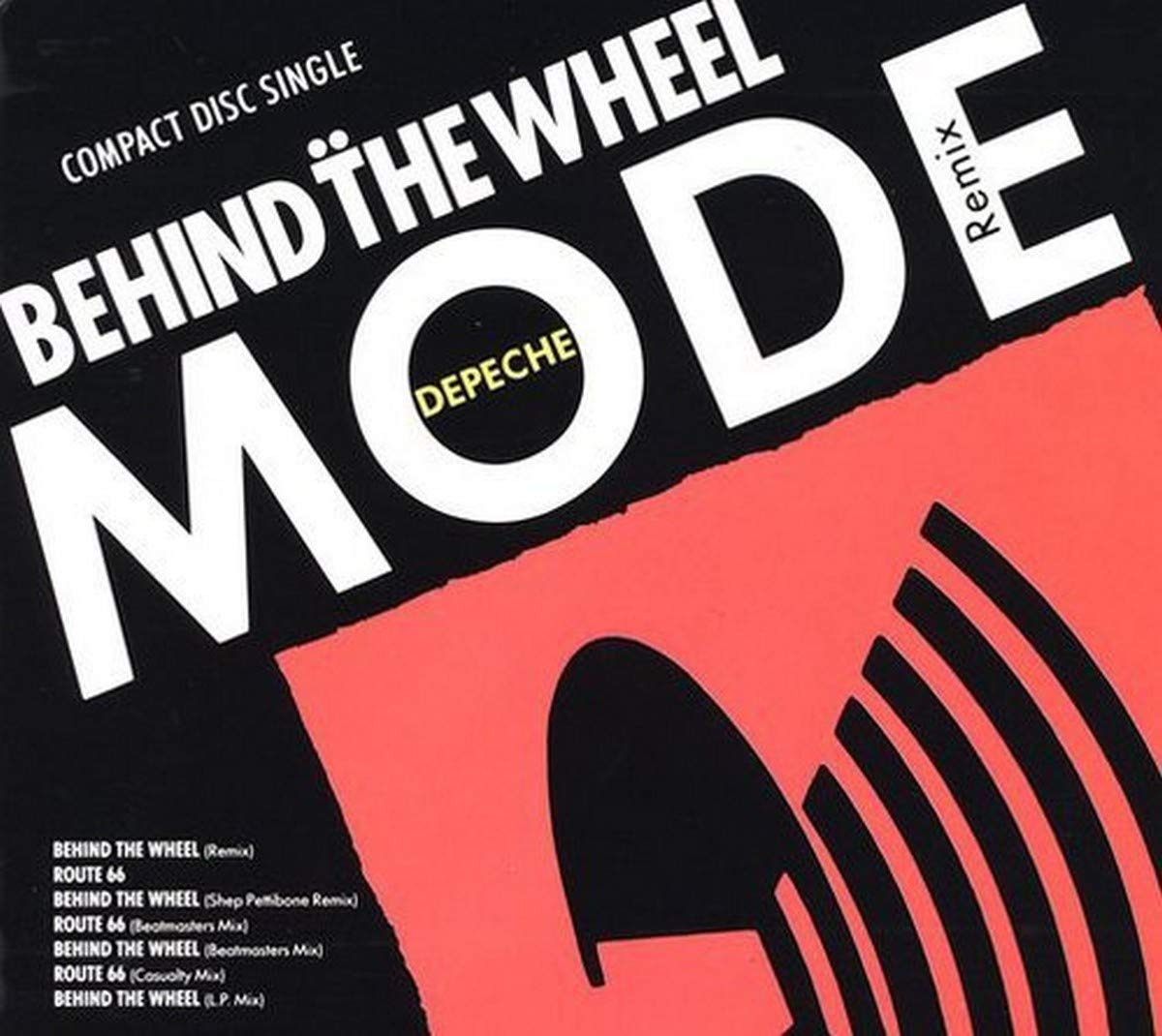
Behind the Wheel Depeche ModeIn a very different place, Depeche Mode cranks out an atypical rock anthem; it’s not your father’s Route 66 and it’s not your daughter’s Depeche Mode. This interpretation comes out of the chute with a repetetive, pounding guitar riff that makes it clear that we’re heading into unmapped territory. Vocals, sung to an almost traditonal background, alternate with the crunching guitar to make a song that drives harder than any other version I’ve heard. When I’m on the road, this is one tune that’s always along.

Walkingbirds

I love hearing new music. I love hearing a new song and falling in love with it. And I especially love hearing about a new group and discovering that I’m going to love everything they ever do.

Walkingbirds are that group today, thanks to a tip from Meryl. 64 kbps MP3s of eight of their songs were available free at their site; that totals about 34 minutes of music, which is almost as much as a Chris Isaak album.

Composed almost entirely of Scott Andrew LePera, the “group” oft includes some Laurie Hallal guitars and vocals, and occasionally sports an additional Derek Poindexter on bass. Somehow, it all manages to sound like acoustic Dishwalla or Better Than Ezra, tinged with Sonvolt. Some first impressions (okay, third impressions) about each of the songs:

  • Cast the Net Wide Sounding ever so Celtic, a gentle folky number turns partly rock via one of the few occurances of electric guitar. A tender request for love. I think I’ll take this one home with me . . .
  • Wasted Trying desperately to sound sad and dejected, it still sounds hopeful and happy to me. Spare and folky; nice percussive punctuation.
  • One Sure Thing Reminds me so much of Dishwalla’s acoustic version of Counting Blue Cars but with lyrics I can actually enjoy (and understand. Sorry.) Poppy and brisk. Probably excellent with a nice zinfandel or Scotch ale.
  • Stay the Same Briefly sounding more like very (very) early Kenny Loggins, a warm and pensive piece.
  • Back Around Definitely worthy of airtime, nice percussion and more ambitious vocals make this stand out, even in this distinguished company.
  • Hello You A sunny Sunday afternoon, languid, paced but not actually slow. Interesting electric guitar work. More nice harmonies.
  • Brickyard Bend Another one for the airwaves, this reminds me of the small town in Texas where I used to live. You could see the line of teenagers just waiting to get out of town. Again, what should feel dismal ends up feeling bright and sunny. Maybe that’s what I like about it. Nice strong rhythym, layers and layers of vocals, and snappy percussion.
  • Gravel Road Requiem This should be the last song on the album. Good driving song (as in, song to listen to while driving, not song that drives – that would be John Fogerty’s Walking In A Hurricane.) Makes me want to get around to the road trip I didn’t take last year. Well-done harmonies, pleasing interplay of acoustic and electric guitars, and some real live drumming. One of the more complex tunes, and one of my favorites.

While I’m already a fan and appreciate the free MP3s, I hope Scott gets around to producing a real full-length CD. The Walkingbirds website is a fun and informative read, and I suspect the album’s liner notes would soon be as tattered as those from my copy of Loreena McKennit’s Book of Secrets. (Note to music moguls: liner notes sell albums. Intelligent informative liner notes sell bands.)

Overture

Hothouse Flowers has long been one of my favorite bands. From the eponymous Thing Of Beauty to their moving cover of I Can See Clearly Now I am always captivated by their grasp of the emotional power of music.

An Irish band, they fall musically between two Irish giants, U2 and Van Morrison, capturing the joy and intensity of the former, blending it with the warmth and soul of the latter. Liam O’Maonlai’s vocals are the band’s signature sound, with his piano playing a major factor in nearly every tune. Strong rhythms remind me of U2’s Adam Clayton/Larry Mullen Jr. combination. A differentiating factor is the lack of real rock guitar leads. Instead, the guitar, whether acoustic or electric, supports the rhythym section or intermingles with the piano. Not a negative, just a difference. Strong use of horn sections and saxophones behind Liam’s vocals create a strong resemblance to Van Morrison’s early work.

Some highlights:

  • People (1988)
    • Don’t Go – Liam O’Maonlai’s piano solo is quintessential; lightning fast, but still somehow emotionally evocative.
    • It’ll Be Easier in the Morning – One of the reasons I consider HF a blues band of sorts. Like most blues tunes, the message is not very profound, but manages to sound deep and meaningful.
  • Home (1990)
    • Give It Up – Sounding ever so much like Van Morrison’s 1970 album His Street Band and the Choir the Flowers foray into American soul music. Big horn section and choral background flow through and around Liam’s lead vocals.
    • I Can See Clearly Now – Slow, deliberate, and beautiful. More poignant and hopeful than Johnny Nash’s original, sometimes this one just feels right.
    • Movies – Musically, it’s about Peter O’Toole’s bass bouncing off Liam’s piano. Lyrically, it’s about cinema-induced fantasies and adventures. One of my two favorites.
  • Songs From the Rain (1993)
    • Be Good – Simple bouncy fun, this may have been the first Flowers tune I ever heard, back when cable radio was new.
    • Thing of Beauty – Ahhhh. It is what it says. Fiachna O’Braondin’s guitar stands out rhythmically, writing the motif for the rest of the tune. Full of glowing word pictures, swelling larger and more intense right up to the end.